
AI in SMEs: a catalyst rather than a replacement
Most discussions about AI in SMEs start with the technology: which model, which tool, which provider? I start with a different question: where is your business currently losing time, compromising on quality or causing stress? Only once that is clear is it worth discussing AI.
Why AI Catalyst exists
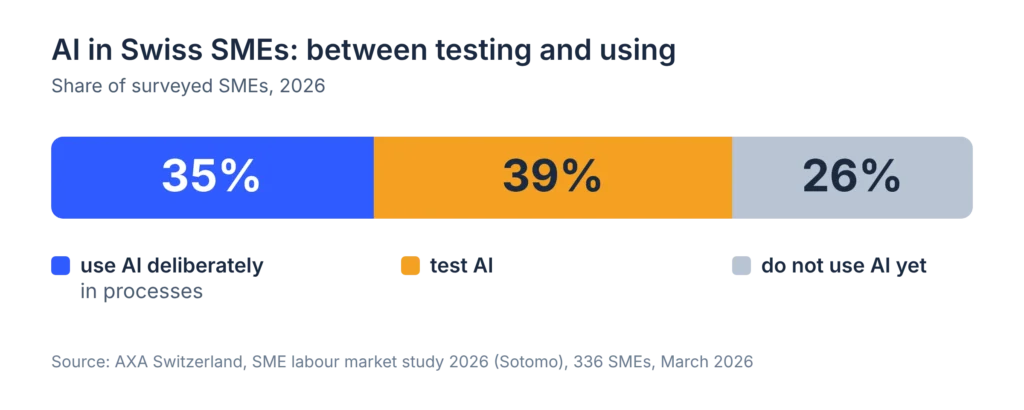
AI has long since found its way into most Swiss SMEs, but is rarely integrated into their workflows. The AXA study on the SME labour market in 2026 shows that 35 per cent are consciously using AI in their business processes, 39 per cent are testing it, and 26 per cent are not yet using it. In the NZZ SME Barometer 2026, 87 per cent are experimenting with AI or building up expertise. And according to the EY AI Survey 2026, 89 per cent use AI at work, yet only 55 per cent deploy it in a targeted or widespread manner, whilst 31 per cent are in pilot phases.
There is therefore a gap between ‘we’re giving something a go’ and ‘it’s running reliably as part of our workflow’. The biggest hurdles here are data quality and data silos (20 per cent), security and data protection (19 per cent) and a lack of specialists (18 per cent). The fear of hallucinations and uncontrolled behaviour, as well as a lack of confidence in dealing with customers, are also mentioned.
My view: An SME rarely has the time or the staff to bridge this gap on its own. Large consultancy firms think in terms of programmes, whilst tool providers think in terms of licences. What’s missing in between is someone who starts with the process, builds the solution themselves and takes responsibility for the outcome.
That’s what AI Catalyst is for: 20 years’ experience in project management, combined with our own, in-house AI solutions.
What AI Catalyst does
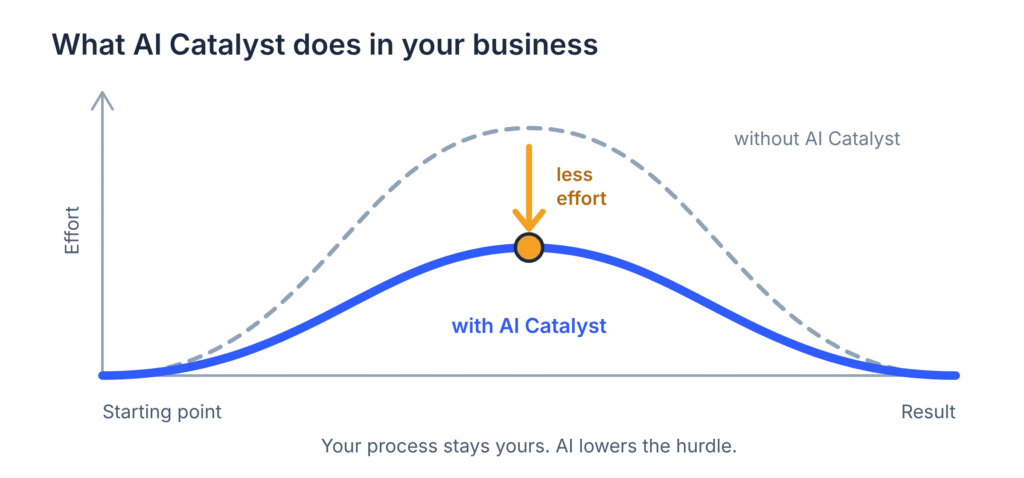
In chemistry, a catalyst reduces the energy required for a reaction. It speeds up a process that would happen anyway, without being consumed in the process. The reaction still belongs to those who set it in motion.
This image also holds true within the company. Your processes, your expertise and your decisions are the response. AI is the accelerator, not the replacement. AI Catalyst embodies precisely this role.
Why now, and why not blindly?
Why now: Generative AI can do something that traditional automation has failed to achieve. It can process unstructured data: a receipt in any layout, an email, a briefing in bullet points. And it uses this to formulate a useful proposal. Rules alone require fixed formats. Its use is growing accordingly: according to AXA, 35 per cent of SMEs use AI to optimise work processes (2024: 23 per cent), and 34 per cent for data analysis (2024: 22 per cent). Those who gain experience now can learn whilst keeping the risk manageable. Those who wait will have to catch up later.
Why not blindly: AI alone is not predictable. In its engineering blog, Salesforce explains that agents driven purely by language models stray from their objectives, produce unpredictable results and are difficult to understand. Anthropic distinguishes between workflows in which language models are controlled via predefined sequences and agents that determine their own course, and advises choosing the simplest solution and only increasing complexity where necessary. According to Anthropic, agents often trade speed and cost for better performance.
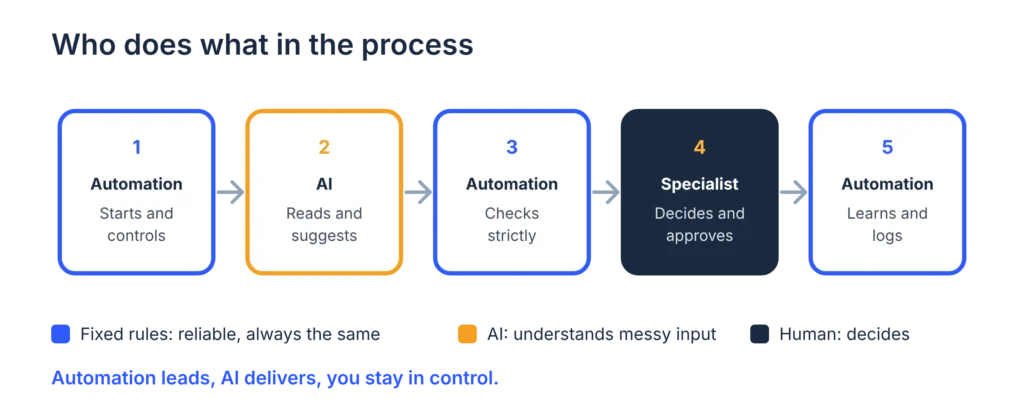
My approach based on this: Automation leads the way, AI delivers. Every task goes to the person best suited to it:
| Task in the workflow | Takes over |
|---|---|
| Launch processes; control their order and quantities | Automation (fixed rules) |
| Read unstructured input, formulate a suggestion with justification | AI |
| Strict checks: duplicates, missing information, invalid values | Automation |
| Decide and approve | Specialist |
| Learn from approvals and keep a record of everything | Automation |
This isn’t a compromise, but the very reason why it works: the AI is allowed to be broad and fast because it is governed by rules and a human has the final say. This means you remain in control, whilst still harnessing the power of AI.
Two real-life examples
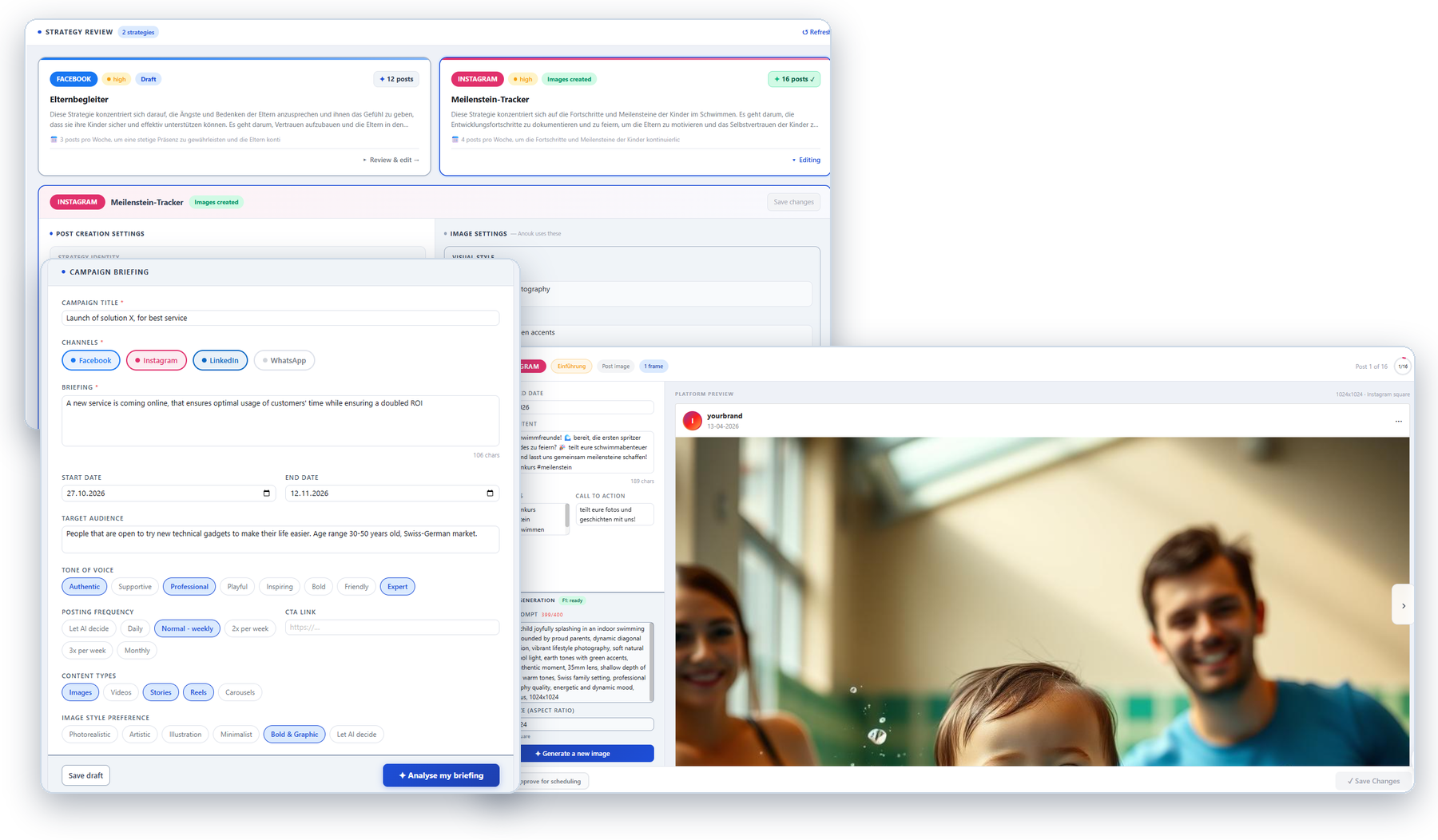
Marketing campaigns. My first solution, SocialSolution, takes a campaign briefing and turns it into strategies for each channel, posts and image ideas. Each step has a fixed status, and the next stage only begins once the strategy has been approved. If the AI generates an invalid date, such as 29 February, a simple rule catches this rather than passing it on.
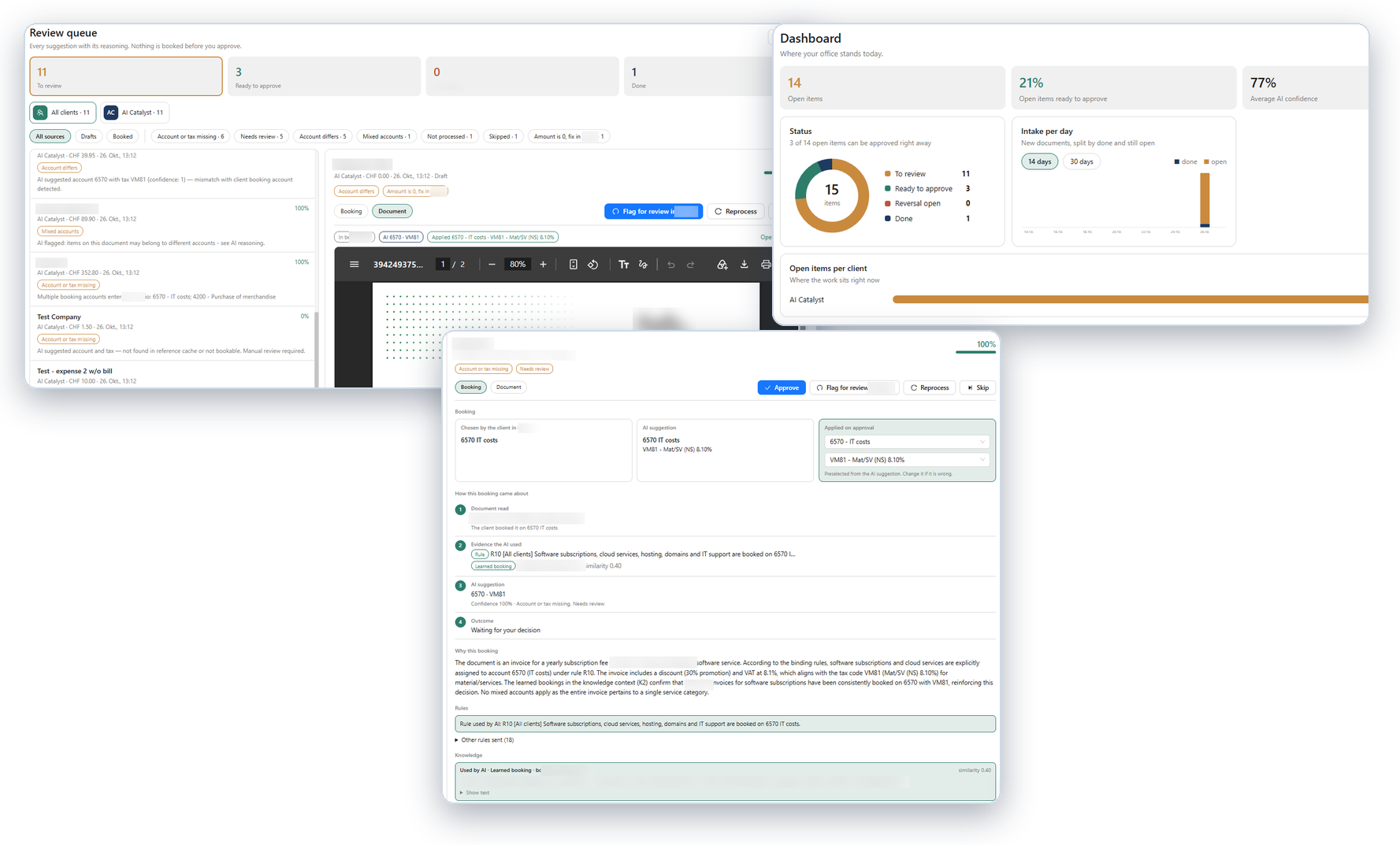
Documents at the trust office. My second solution, LedgerMagic, checks documents before they are posted: the AI suggests an account and tax code, along with a justification; a specialist approves them, and the system learns from each approval. Nothing is posted without approval.
Both solutions follow the same pattern. You can read more about how they work alongside your existing systems in the next post.
Three questions to ask before investing in AI
- Which process takes up the most time or causes the most rework today?
- Who makes the decisions in this process, and how does that person know what is right?
- How would you be able to tell in three months’ time that things have improved?
If you can answer these questions, choosing the right technology is the easier part.
Safety as a prerequisite
When it comes to accounting and customer data, operating in Switzerland with separate environments for each customer is the basis of the business, not a selling point. According to EY, 51 per cent of respondents consider it business-critical that AI systems comply with Swiss or European data protection requirements and process data in Switzerland or the EU.
Where do you have the greatest leverage?
During a free initial consultation, we’ll work out which process in your business stands to gain the most from becoming faster and more reliable. Request an initial consultation now.